
Opinion
Exercises
Pro Tips
Is Group Fitness or Personal Training Better for Beginners in Singapore?
Starting your fitness journey in Singapore can feel overwhelming. Between the humidity, packed schedules, and endless studio options, the big question hits hard: should you jump into group fitness classes or invest in personal training?
There’s no universal winner. Both can transform beginners—if they match your goals, budget, personality, and lifestyle. This decision guide breaks down the real differences across cost, accountability, social motivation, and coaching quality. By the end, you’ll know how to choose (and why some group experiences punch above their weight).
Cost: What Does Your Wallet Actually Feel?
Personal training in Singapore typically runs $80–$150+ per session. Packages bring it down a bit, but you’re still looking at a serious monthly outlay if you train 2–3 times a week. It’s premium pricing for premium attention.
Group fitness is far more accessible. Drop-ins often sit around $25–$40, while class packs or unlimited memberships can bring the effective cost closer to $20–$30 per session. For most beginners testing the waters, that lower barrier means you’re more likely to show up consistently without the financial pressure.
Bottom line for beginners: If budget is a real constraint (and for many Singaporeans juggling rent, transport, and everything else, it is), group fitness wins on pure accessibility. You can start, experiment, and build the habit without haemorrhaging cash.
Accountability: Who Keeps You Honest?
Personal training delivers high accountability. Your trainer knows when you’re late, when you skipped, and when your form is slipping. That one-on-one relationship creates a powerful “someone is watching” effect that works especially well for people who struggle with self-discipline.
Group classes offer a different flavour. Fixed schedules create external structure. The coach notices absences in smaller studios, and the group itself becomes a soft accountability network—especially once you start recognising faces. Missing class can feel like letting the crew down.
Neither guarantees you’ll stick with it long-term. The real difference is style: personal training leans on a professional relationship; group fitness leans on rhythm and community. Beginners who need tight structure often do well with personal training first. Those who respond to energy and routine often thrive in groups.
Social Motivation: Do You Perform Better Alone or With Others?
Some people hate being watched. Others feed off the room.
Group fitness shines here. Shared suffering, collective high-fives, and the quiet competition of “if they can finish that set, so can I” create momentum that’s hard to replicate alone. For many beginners, the social element reduces gym anxiety and makes training feel less like a chore and more like a weekly event.
Personal training is quieter. It’s focused, private, and free of comparison. Ideal if you’re self-conscious, recovering from something, or simply prefer zero distractions.
In Singapore’s fast-paced environment, the social lift of group classes often helps beginners stick around longer. Isolation is easy here; a good studio community counters that.
Coaching Quality: Form, Feedback, and Safety
This is where the gap looks biggest—and where it can close.
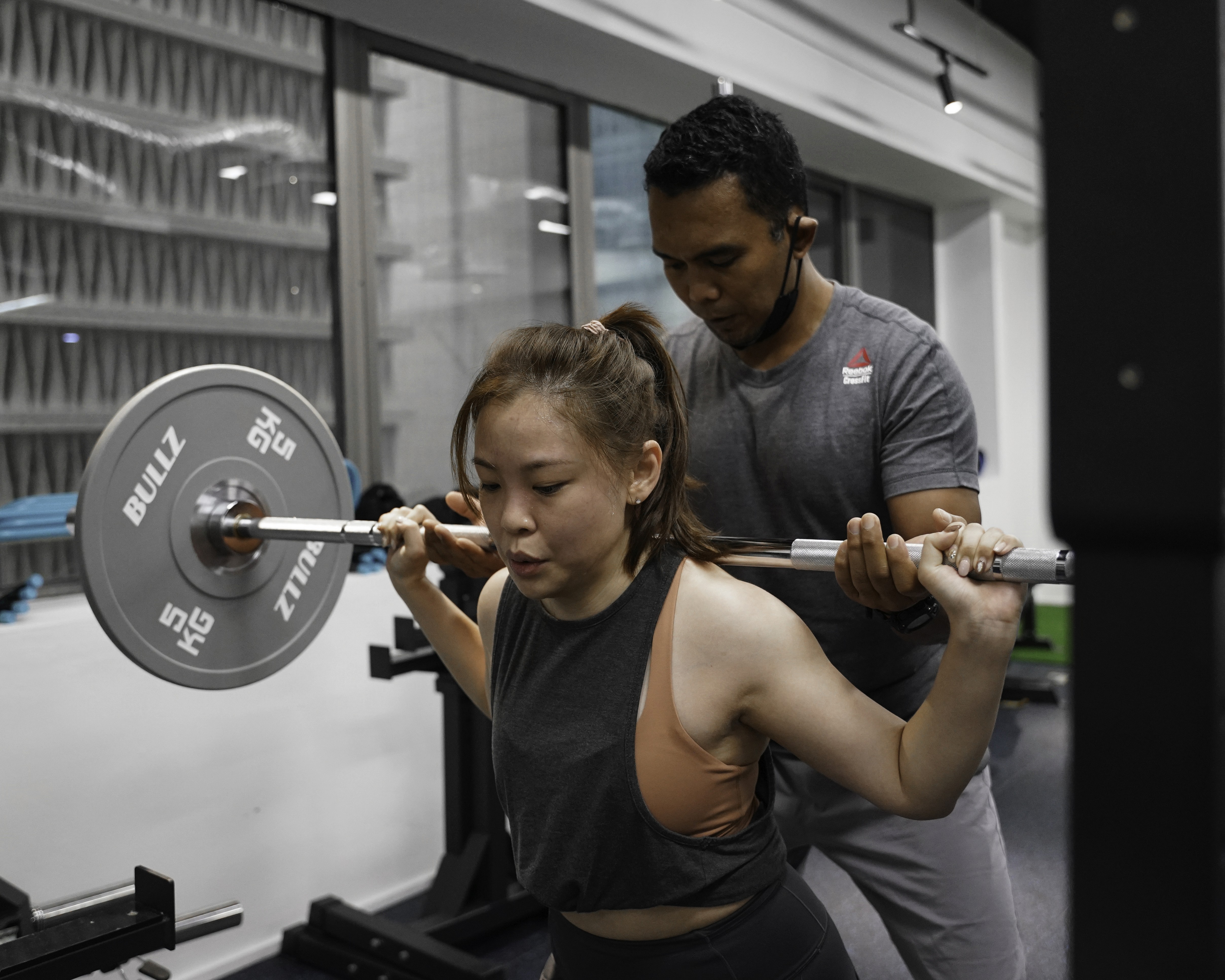
Personal training offers maximum individual attention. Every rep can be coached. Programming is fully customised. For absolute beginners with movement limitations, previous injuries, or very specific goals, this level of precision is hard to beat.
Traditional large group classes sometimes sacrifice quality for volume. One coach managing 20+ people means limited form checks. Beginners can develop bad habits if no one is watching closely.
But not all group fitness is created equal. Smaller, expert-led sessions change the equation. When coaches are experienced athletes or highly trained instructors who prioritise technique over just “sweat points,” you get meaningful corrections within the group setting. Real-time cues, individual adjustments, and progressive coaching become possible even when you’re not the only person in the room.
Studios that treat group classes like high-touch coaching environments—rather than entertainment classes—give beginners the safety and skill development of personal training without the full price tag. That’s the sweet spot many people in Singapore are looking for.
How to Choose: A Practical Decision Framework
Ask yourself these questions honestly:
Budget reality — Can you comfortably sustain $80–$150 sessions multiple times a week, or do you need something closer to $25–$30 per session?
Learning style — Do you need private space and total focus to feel safe learning movements, or do you pick things up faster watching and moving with others?
Motivation type — Are you driven by a personal relationship with a coach, or by energy, community, and scheduled commitment?
Goals and starting point — Pure beginner with no movement background or any injury history? Personal training (or a high-coaching-quality group) is safer. Already reasonably coordinated and just need consistency? Group fitness often works brilliantly.
Lifestyle fit — Fixed class times that force you into a routine, or flexible one-on-one slots that work around your calendar?
Many successful beginners actually start with a short block of personal training (or a fundamentals-focused group programme) to lock in solid technique, then transition into regular group sessions for sustainability and community. Others dive straight into quality group fitness and never look back.
The Bridge Option Worth Considering
Here’s the practical reality in Singapore’s fitness scene: the best starting point for a lot of beginners isn’t pure personal training or generic group classes. It’s expert-coached group sessions that deliver personalised technique correction inside a community setting.
Studios like GRITYARD sit in that middle ground. Founded by former national athletes, their programming focuses on the fundamentals—strength, power, agility, core, endurance—with coaches who actually prioritise form and progression over just getting you sweaty. You get the social energy and lower cost of group fitness, plus coaching quality that feels closer to personal training. For many beginners, that combination removes the intimidation factor while still building real skill and confidence.
It’s not the only path, but it’s a smart one if you want both accountability and belonging without the full personal training price.
Final take:
Neither group fitness nor personal training is inherently “better” for beginners in Singapore. The better choice is the one you’ll actually stick with, the one that matches how you learn and what keeps you showing up. Start where the barriers are lowest and the coaching is highest quality. Build the habit. Refine from there.
Your body doesn’t care about the format. It cares that you train with intention, consistently, and with good technique. Choose the environment that makes that easiest for you.
Ready to test the waters? Look for beginner-friendly, technique-focused sessions that feel welcoming rather than intimidating. The right start makes all the difference.